Heading for a swim? Here are 11 tips to stay safe in open water this summer
Take care this summer by swimming at lifeguarded spots, acclimatising to the cold, and knowing how to float on your back if you get into trouble.

As the summer holidays get underway, taking a dip in your local lake, river, or sea might seem like a great refreshing way to kick off the season.
However, open-water swimming presents unique risks and challenges that shouldn’t be overlooked.
“People often overestimate their own ability and underestimate what the hazards might be,” says Peter Dawes, general manager lifeguard operations at Royal National Lifeboat Institution (RNLI).
“No matter how warm it is in terms air temperature, the water can still be cold, and lots of people get caught out by that.”
To help you and your family enjoy the water safely this summer, here are 11 essential tips to keep in mind…
1. Gather information beforehand
“Try to gather a little bit of information before you go to understand what the conditions and weather is going to be like,” advises Dawes. “If you’re visiting a beach, try to understand the tide times, too.
“One big benefit of going to a lifeguarded beach or a supervised area is that you can chat to the lifeguards. They will tell you if there’s any hazards or problems to look out for.”
2. Stop and think

“Stop and think about all the potential hazards,” recommends Dawes. “Rip currents are one of the biggest hazards on beaches and underwater hazards are a big issue for inland pools of water.
“For both environments, having an awareness about changes in weather, water temperature and depth is really important.”
3. Stay together
“If you’re in a group, stay with the group,” recommends Dawes.
4. Swim between the red and yellow flags

“Staying between the flags is important because the lifeguards have chosen that area deliberately as the safest part of the beach to swim in,” explains Dawes.
“In more dynamic beaches, we will sometimes put the flags on a sandbank, which is relatively safe, but just a short distance outside of those flags there could potentially be a rip current or a more dangerous location.
“Furthermore, the lifeguards can’t be everywhere at all times, so the red and yellow flags is the area that they will focus on.”
5. Supervise children
“If you’ve got very small children, enjoy the water with them so you can keep an eye on them,” advises Dawes. “You should always be within an arm’s length of your child so you can always reach them.”
6. Wear bright clothing
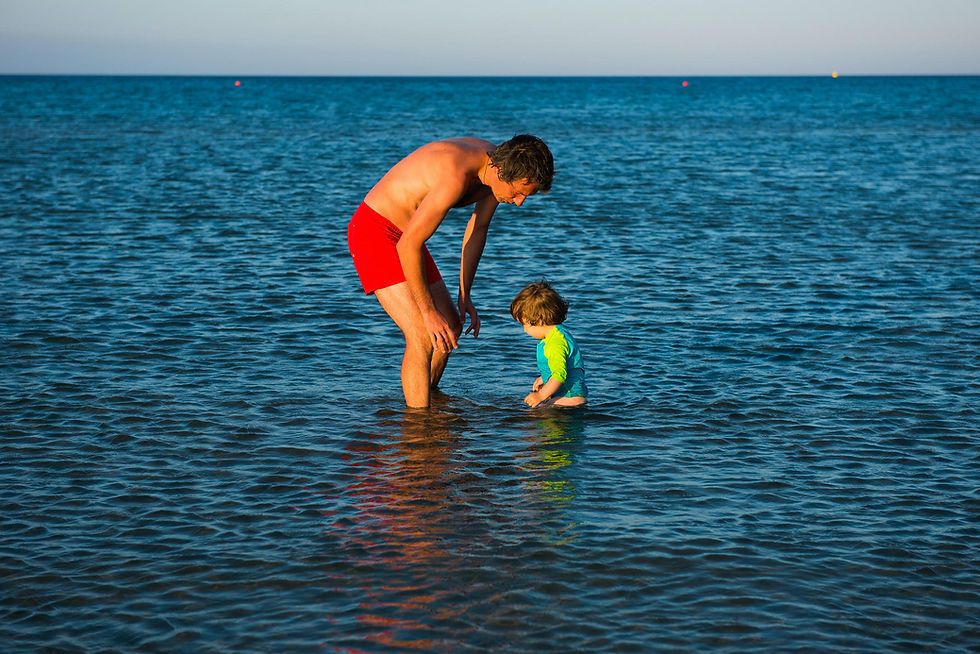
“We also recommend putting children, particular young children, in nice bright clothing so you can spot them more easily,” recommends Dawes.
7. Remember to acclimatise
“When entering the water, it’s always best to enter from a safe place and to slowly acclimatise,” advises Dawes. “You might want to consider wearing a wetsuit.”
8. Have an exit strategy
“Make sure that you know where you’re going to exit the water,” says Dawes.
9. Don’t jump straight in

“If you enter the water quickly, you’re not acclimatised and there’s potential for cold-water shock,” warns Dawes.
There may also be dangerous hazards lurking underneath that you aren’t aware of.
“One of the biggest problems, particularly with inland waterways, is that the water clarity doesn’t always allow you to see underwater hazards,” says Dawes.
“There could be roots, branches, rubbish and other things in there that have the potential to cause harm. So, if you enter the water slowly rather than jumping in, there’s less chance of any injury.”
10. Practise floating
“If you do get in trouble, our safety message is to float,” says Dawes. “Ideally try to practice it when you’re in a safe place like a swimming pool. Put your head back, get your ears in the water and try to get as flat as possible.”
He explains that the benefit of floating on your back is that your airway will stay above the water.
“It gives you a chance to get your breathing back to normal and conserve your energy while you wait for help,” says Dawes.
11. Call for help
“If you do see anybody in trouble, call 999,” advises Dawes. “If you’re in a beach location, ask for the coastguard. If you’re inland, ask for the fire and rescue service.”